How does FlySafair charge so little and stay in business?
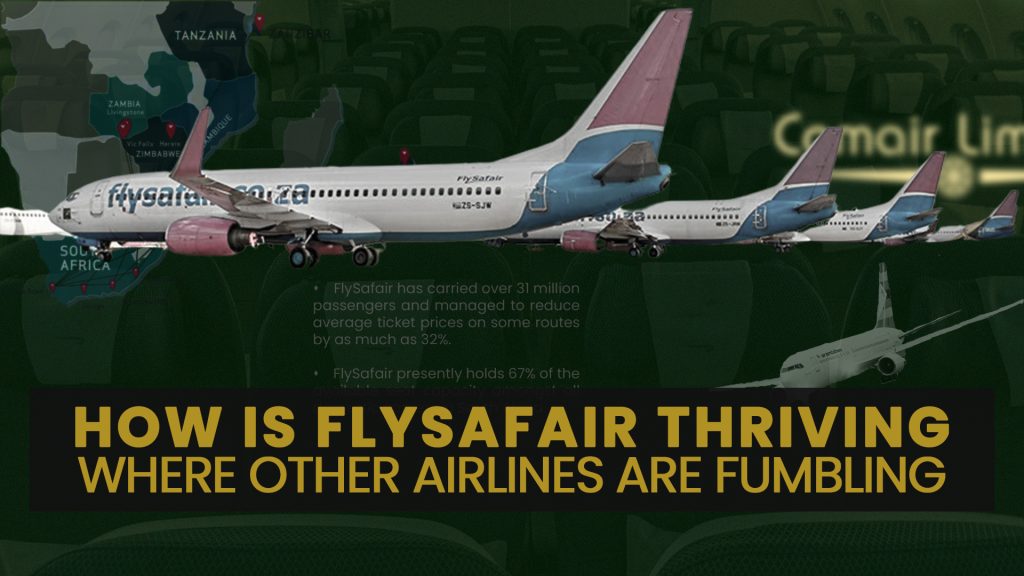
From the Zimbabwean context, air travel is a relatively rare form of travel. Looking at the border between Zimbabwe and South Africa, around 3 million road passengers cross the border versus just 400,000 Air Passengers. There is a 7.5X gap between the two when looking at traffic volumes. So it seems quite odd that given these pre-COVID numbers FlySafair, a relatively small airline by number of routes and number of passengers, would pick up the already airline-populated Harare Johannesburg route. Moreover, it came in with a strategy that aims to lowball every other airline servicing the route.
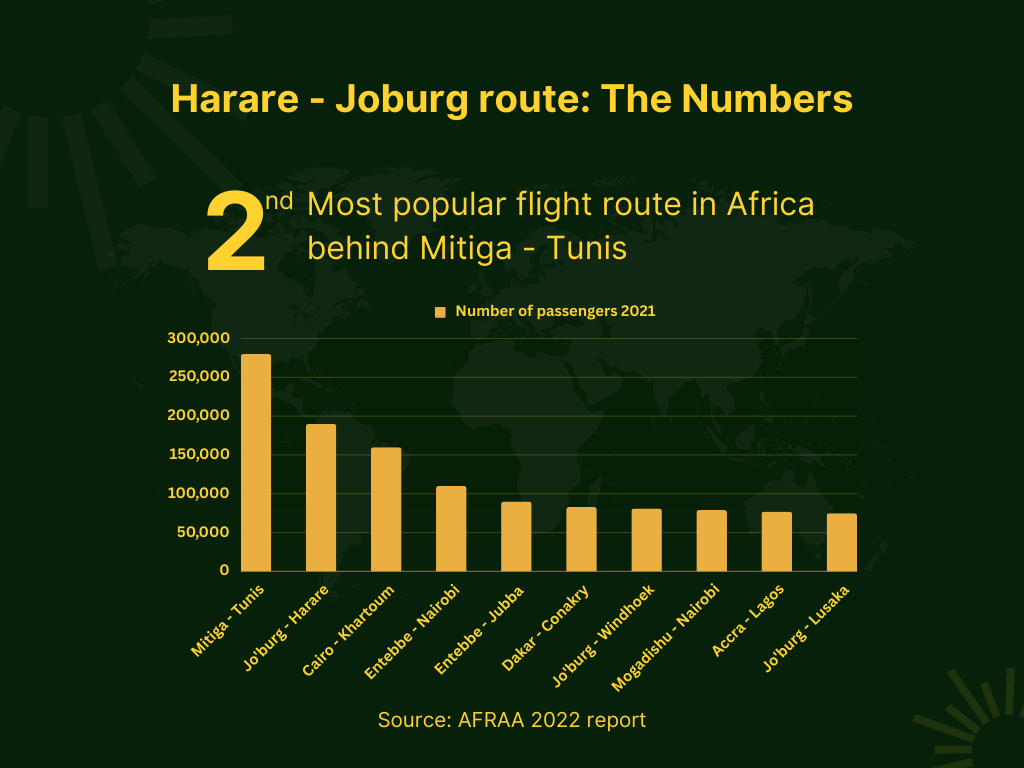
Harare - Joburg route. The Numbers
10 major airlines pass through the Robert Mugabe International Airport with 8 of them servicing the Harare-Johannesburg route. In 2021, this route was the second most popular Intra Africa route with around 180,000 passengers and 7 daily flights. With an average ticket price of US$150, it leads to this route having a market cap of US$27 million.
Typical airline costs - General breakdown
Labor was the most important operating cost of an airline, accounting for about 32.3% of the total expenses in the United States in 2019. This included the wages and benefits of pilots, cabin crew, ground staff, and other employees. Labor costs were also influenced by the level of unionization, the seniority of the staff, and the productivity of the workers.
Representing about 17.7% of the total expenses fuel costs were the second biggest and are highly variable and depend on the price of oil, the fuel efficiency of the aircraft, the distance and duration of the flight, the load factor, and the weather conditions. Fuel costs can also be affected by the hedging strategies of the airlines, which involve buying fuel in advance at a fixed price to reduce the risk of price fluctuations.
Tagged: Afcfta, Air fares, Air Travel, Air Zimbabwe, Airline, Cheap Flights, Comair, Domestic flights, FlySafair, International flights, SADC, Tourism