What’s holding back Southern Africa’s remittance market?

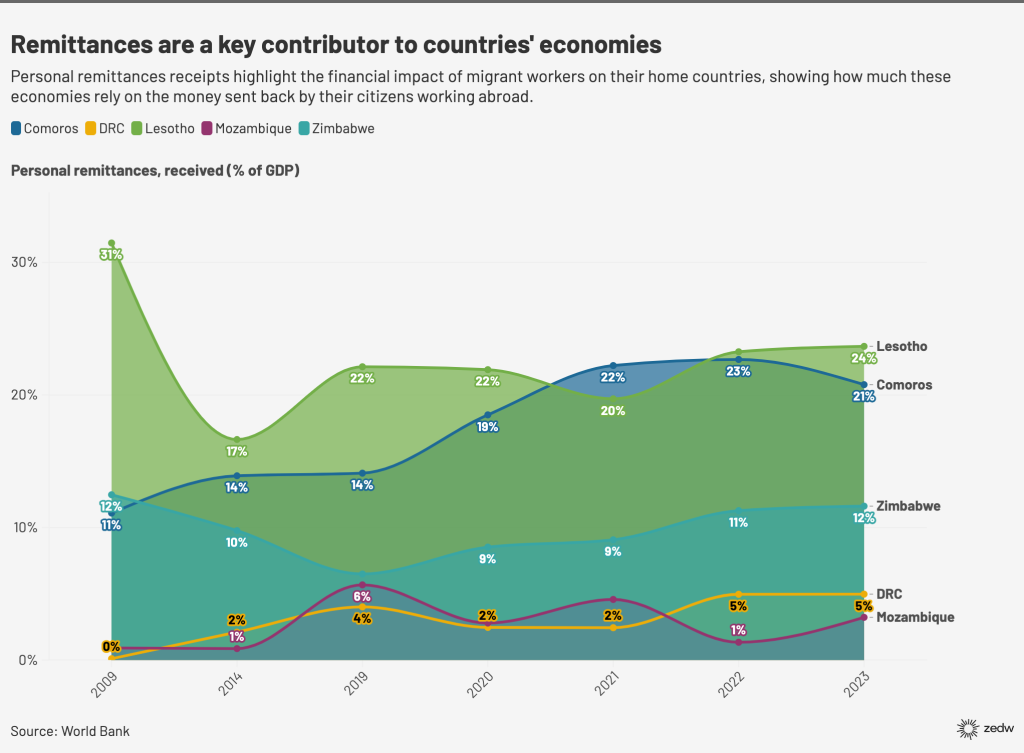
Remittances play a significant role in shaping not only the movement of money across Africa but also the operation of entire economies. As of 2023, personal remittance receipts in Lesotho were as much as 23.67% of the country’s GDP - one example illustrating how important cross-border remittance activity can be to an economy. Whilst Lesotho is an extreme example of the impact and importance of remittances, many other countries continue to illustrate the growing importance of remittances.
This prompted us to look into what the countries and market participants in Southern Africa need to be addressing if growing the remittance industry is a priority in 2025 and beyond.
What problems remittances are solving?
Although the terminology and methodology surrounding remittances have evolved, we will primarily consider cross-border payments made by individuals to family members or other individuals in their countries of origin.
Remittances have come to play an integral role in Africa, as migrant workers who left their homes in search of greener pastures send funds back home to help lift families out of poverty.
Tagged: Angola, Banking, Banking penetration, Botswana, Comoros, digital readiness index, DRC, eSwatini, governance, importance of remittances index, Lesotho, Madagascar