Zambia SME Policy Revolution: A model to regulate Africa’s informal sector?
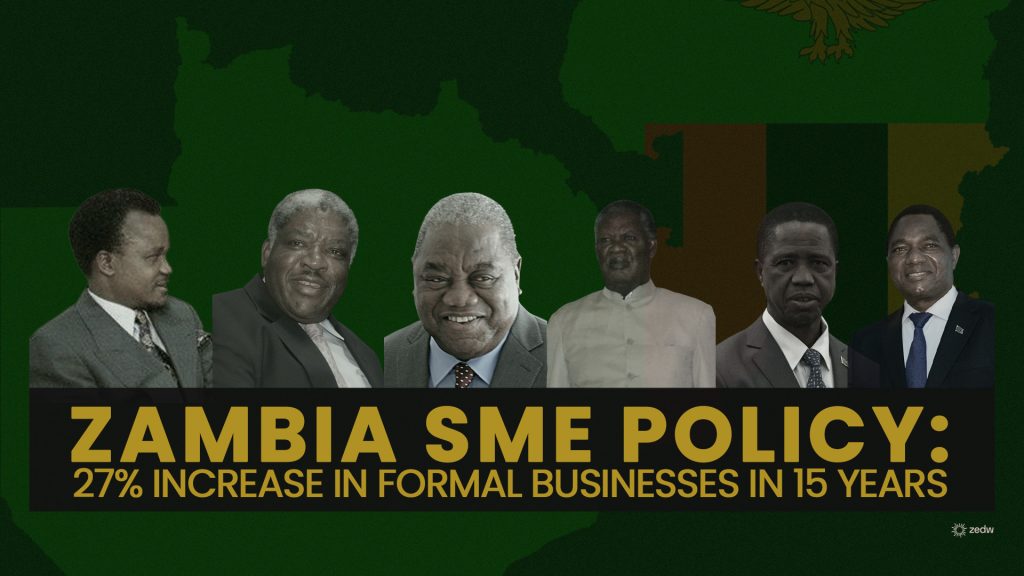
The 2008 Zambia SME policy is a quiet revolution on how to formalize the informal sector. The deliberate and patient policy has garnered measurable results through the relatively honest reporting from the Zambian Government's Agencies.
Small to Medium Enterprises (SMEs) are the backbone of the global economy and their importance is underscored by the fact that they represent 90% of businesses and more than 50% of employment worldwide according to The World Bank. With projections of an estimated 600 million jobs by 2030, SMEs are a hard segment of the market to ignore and that is why many governments have them as a high-priority policy point.
However, it is more than plain sailing, particularly in Africa. The rate of informality of businesses is near 83% in Africa as a whole, and 85% in Sub-Saharan Africa according to the International Labour Organisation.
This puts the youngest continent on the planet (with a median age of 20 and 60% of the population under the age of 25) in a predicament. Many who are coming to an age where they are seeking employment are left sometimes with few options because, whether they hold some qualification or not, the job market is tough, to say the least.
Furthermore, that generation of job seekers are, without an avenue into the small pool of formal businesses, left with little option but to find employment where they can and that in most cases leads to the informal sector.
Tagged: Block Management System (BMS), Electronic Fiscal Devices (EFDs), Export Board of Zambia (EBZ), German Agency for International Cooperation (GIZ), International Trade Centre (ITC), Micro Small Medium Enterprises (MSME), Ministry of Commerce and Trade Zambia, Patents and Companies Registration of Zambia, SED Act, Small Enterprises Development Board (SEDB), Small Industries Development Organisation (SIDO), Tax Invoice Management Systems (TIMS)