The price of growth: How fundraising impacts startup share structure (Startup Autopsy)

In a separate report in the startup autopsy series, we explored how a startup finds product market fit (PMF) using mobility startup WhereIsMyTransport (operational from 2015-2023) as the case study. We looked at the impact that finding PMF had on the startup’s balance sheet (particularly the revenue) and its ability to raise funds. Because WhereIsMyTransport was registered in the UK their financial documentation. In this second part, we will be exploring how fundraising affected the business’ shareholding…
In most cases at the inception of the startup, founders own the entire company and then as it grows investors get an increasingly large piece of the pie with some of the shares also distributed as employee stock options.
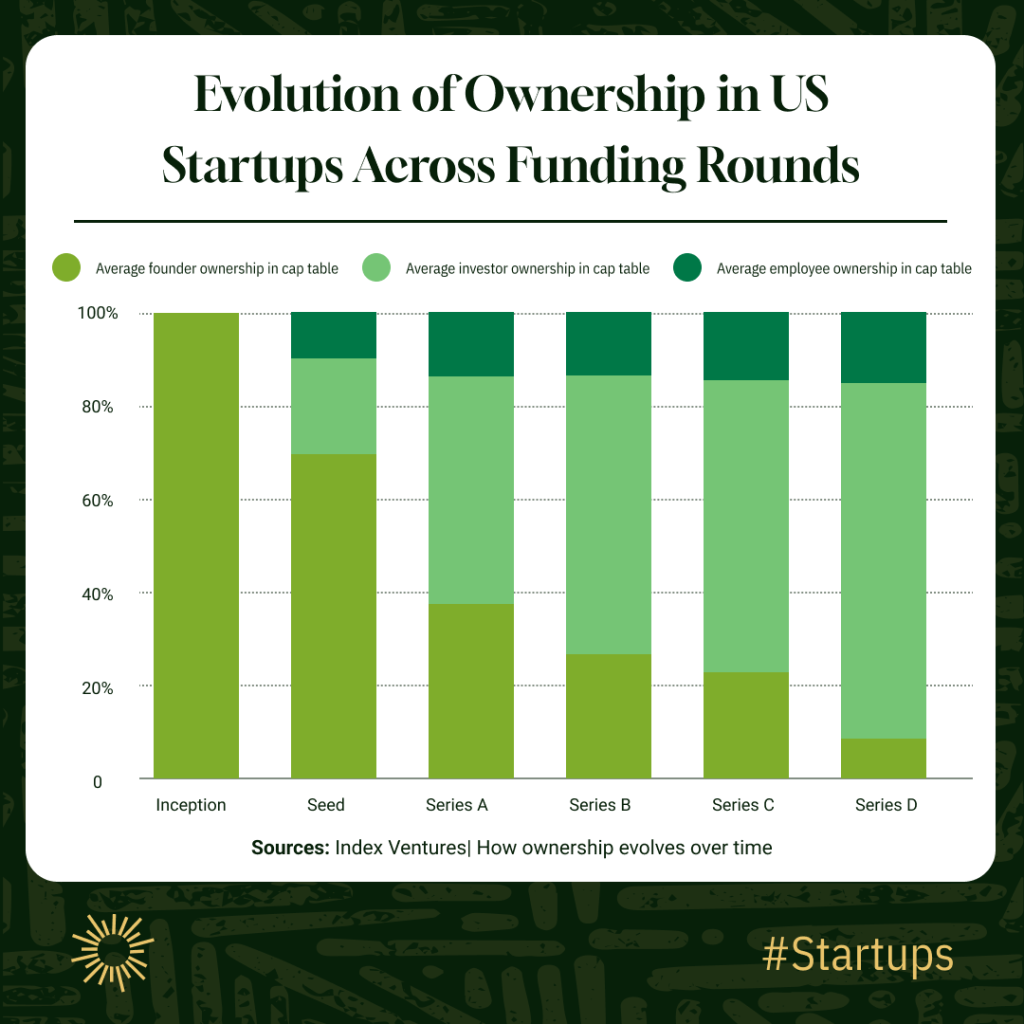
Most examples we have of this evolution are from the US (as seen above) but among the documentation filed by WhereIsMyTransport, we did manage to determine what an African version of this evolution looks like over time.
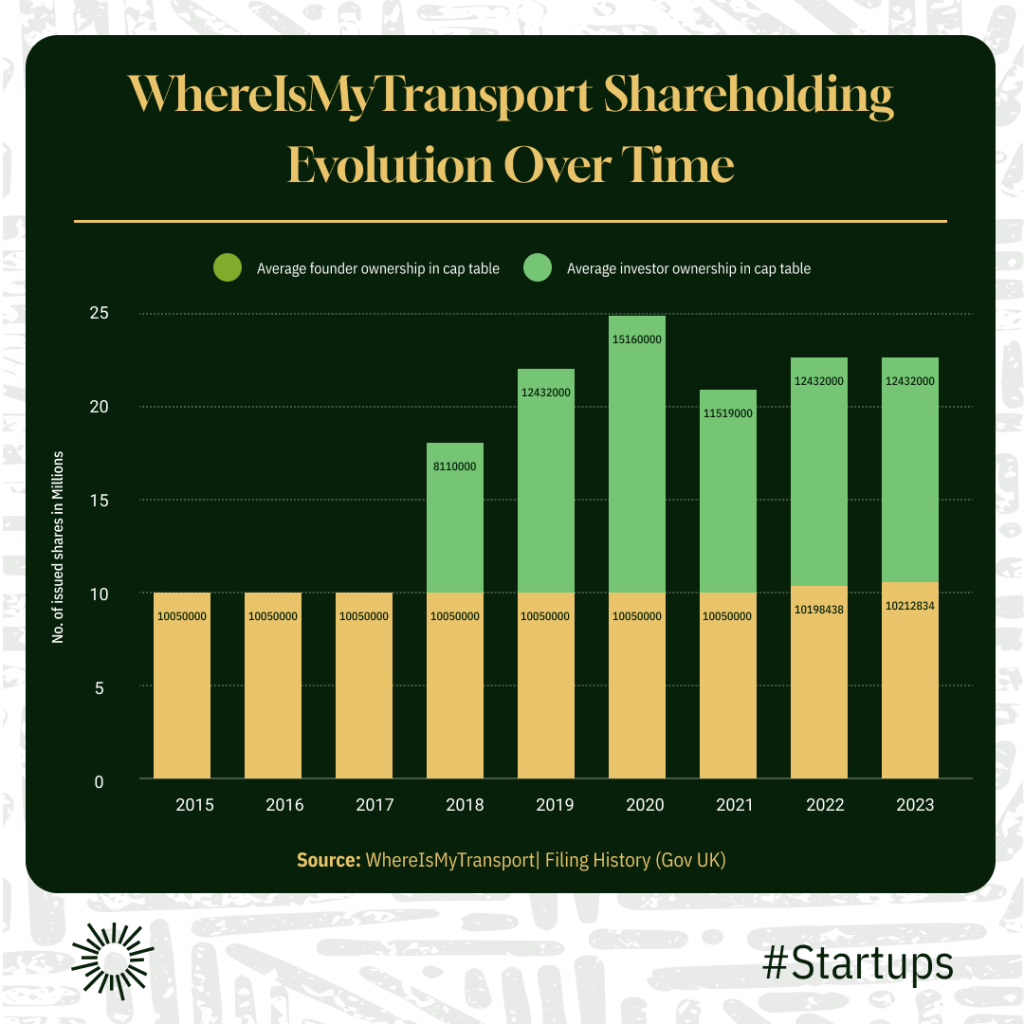
The stark difference between this and the model we saw in the initial column chart is that employee share ownership didn’t play a significant role in WhereIsMyTransport’s shareholding. From the documentation, we noticed that in 2022 the startup only had 0.65% of shares under the ESOP (Employee Stock Option Plan) category.
Tagged: Fundraising, Google, Liil Ventures, startup shareholding, Startups, Toyota Tsusho Corporation, WhereIsMyTransport